DIY vs Professional Ceramic Coating: What You Risk?
Professional ceramic coating lasts longer, includes paint correction, and comes with a warranty, while a DIY kit costs less upfront but puts the prep, application, and every mistake on you. The biggest DIY risks are high spots, dust trapped under the coating, and swirl marks sealed in for years, and fixing them usually means machine polishing and recoating. A DIY kit can make sense on an older daily driver. For a new, leased, or high-value vehicle, professional installation is the safer investment.
Ceramic coating delivers gloss, hydrophobic water beading, and UV protection that traditional wax cannot match. But once you start researching, you hit a fork in the road: grab a consumer kit and tackle it yourself, or hand your keys to a certified detailer. At Helios Detail Studio in Wake Forest, NC, we install Gtechniq coatings and handle paint correction in-house, so here is an honest look at what each route puts on the line.
DIY vs Professional Ceramic Coating: The Core Differences
Picture a common scenario. An owner applies a consumer kit in the garage on a humid Saturday. Weeks later, the hood shows a "minor haze" that turns out to be a patchwork of high spots where the coating flashed unevenly, with dust trapped underneath. The fix is machine polishing and recoating the entire hood, which can cost nearly as much as professional installation would have.
Consumer kits have improved. They offer longer working times and more tolerance for uneven application, but most last anywhere from several months to a few years and come with no installer-backed warranty. If something goes wrong, you are on your own.
Professional-grade coatings are less forgiving. They flash faster, demand precise leveling, and need the right temperature and humidity to cure properly. In exchange, they deliver far greater durability. Gtechniq restricts its flagship Crystal Serum Ultra to trained, certified installers for exactly this reason. As a Gtechniq authorized installer, we offer three ceramic coating packages: the Level 1 EXO Package, Gtechniq Serum Light with five years of protection, and our flagship Gtechniq Ultra with up to nine years.
Both routes can produce gloss and water beading on day one. What separates them is what happens at month six, year two, and year five, and that comes down to preparation and application conditions far more than the product in the bottle.
| Factor | DIY Ceramic Kit | Professional Installation at Helios |
|---|---|---|
| Paint correction | Up to you, if it happens at all | Included in every ceramic package (Level 1 or Level 2) |
| Application setting | Home garage, exposed to dust, humidity, and temperature swings | Our studio, with Gtechniq certified installers |
| Expected durability | Several months to a few years, depending on the product and prep | 1.5 to 2 years (EXO), 5 years (Serum Light), up to 9 years (Ultra) |
| Warranty | No installer warranty | Included with Gtechniq Serum Light and Gtechniq Ultra packages |
| Your time | A full weekend or more | 1 to 5 days at our studio, depending on the package |
| Best for | Older daily drivers and hobbyists with modest expectations | New, leased, and high-value vehicles |
Where DIY Applications Go Wrong
Most DIY ceramic coating failures are not caused by bad products. They come down to timing, environment, and inspection.
High Spots and Late Leveling
When you spread a coating across a panel, you have a narrow window to buff off the excess before the solvent flashes and the coating begins to harden. Detailers call missing that window late leveling. Wait too long, or let the humidity spike while you work, and the coating sets with streaks, rainbow patterns, and raised high spots. Once a high spot cures, it has to be machine polished off and the panel recoated, and it is easy to introduce new swirl marks that look worse than the original defect.
Dust, Humidity, and Temperature Swings
A single speck of airborne grit landing on a wet panel gets sealed permanently beneath the coating. Temperature swings between your garage and the outside air can interfere with flashing and curing, leaving cloudy patches that will not buff out. These are among the most common reasons owners come to our Wake Forest studio asking for correction and reapplication.
No Warranty to Fall Back On
When a consumer kit fails, there is no installer to call, no labor coverage, and no performance guarantee. The outcome, and the cost of fixing it, is entirely yours.
When a DIY Kit Makes Sense
To be fair, DIY has its place. A kit can work well on an older daily driver whose paint is already past saving, and if you enjoy the process and keep expectations modest, careful application on decent paint can look good. The risk climbs sharply when the vehicle is new, leased, or high-value, because application errors on pristine paint are far more noticeable and far more expensive to reverse.
Preparation and Finish Quality
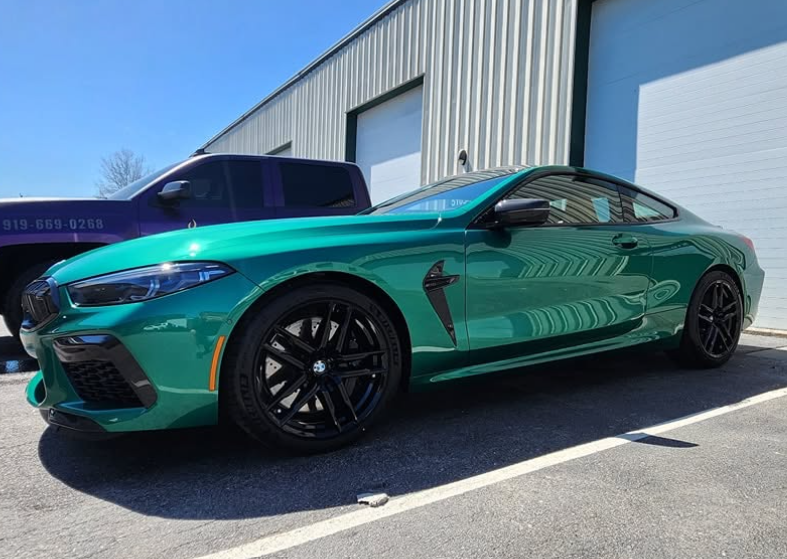
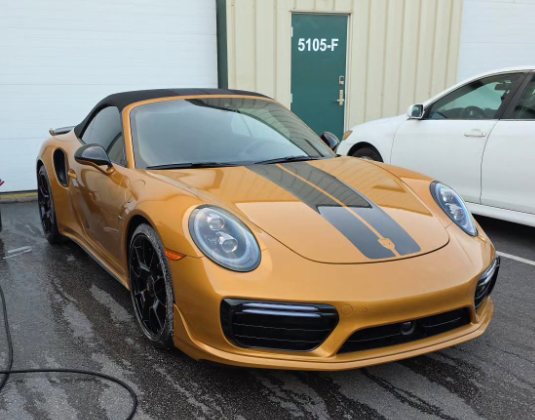
A ceramic coating seals whatever is underneath it. Swirl marks, oxidation, and bonded contaminants stay locked in for the life of the coating, and the added gloss amplifies imperfections rather than hiding them. Skipping correction is the most common mistake we see. Thorough professional prep typically includes:
• A careful wash to remove dirt, road grime, bird droppings, and tree sap
• Decontamination to lift bonded contaminants and embedded iron particles
• Machine polishing to remove swirls, scratches, and light oxidation
• A panel wipe to strip polishing oils so the coating bonds directly to the clear coat
Every ceramic package at Helios Detail Studio includes paint correction: Level 1 correction with our EXO package, and Level 2 correction with Gtechniq Serum Light and Gtechniq Ultra. That prep time is a big part of why a professional coating costs more than a kit, and why the result has a smooth, uniform gloss.
Costs, Warranties, and Ongoing Care
A DIY kit looks inexpensive until you add up what proper prep requires: wash supplies, a clay kit, iron remover, panel prep spray, a machine polisher, compounds and polishes, and a stack of quality microfiber towels. Add a full weekend of your time, and the gap narrows quickly. If a mistake needs professional correction, the total can approach the cost of doing it right the first time.
Professional pricing depends on your paint's condition, the coating package, and the size of your vehicle. We quote every vehicle individually, and turnaround runs one to two days for the Level 1 EXO Package, two to three days for Gtechniq Serum Light, and three to five days for Gtechniq Ultra.
Keep in mind that a warranty period is not the same as a coating's lifespan. Coating warranties come with maintenance conditions, such as regular hand washing with pH-neutral soap, prompt removal of bird droppings and sap, and keeping records of your care. Before committing, ask whether the warranty covers labor, who backs it, and what it excludes. Ask us about the warranty terms for your package before work begins.
Ceramic coating protects against UV rays, bird droppings, bug residue, tree sap, and acid rain, and it makes washing much easier. It will not stop rock chips or door dings. For impact protection, paint protection film is the right tool, and many owners combine PPF with ceramic coating for complete coverage.
Choosing the Right Option for Your Vehicle
The right answer depends on the vehicle and your goals. For an older truck where easier washes are the main goal, a careful DIY application can serve you well.
But if you just took delivery of a new car, need to return a lease in showroom condition, or own something with real financial or sentimental value, the math shifts. Fresh factory paint is the worst place to learn, and a professional package gives you correction, certified installation, and warranty coverage.
Helios Detail Studio was established in 2010, earned Gtechniq certification for automotive ceramic coatings in 2016, and added marine certification in 2020. We also hold XPEL, Optical Defense, and LEGEND PPF certifications, and we coat cars, trucks, and RVs and boats across Wake Forest, Raleigh, Durham, Cary, and Rolesville.
Skip the Weekend Gamble with Helios Detail Studio
Your paint gets one clean start under a ceramic coating, so it pays to get it right. At Helios Detail Studio, we assess your paint, correct it, and install the Gtechniq package that fits how you drive, whether that is the Level 1 EXO Package for a daily driver or Gtechniq Ultra for a car you plan to keep for the long haul. You get a properly prepped, warranty-backed finish, and you get your Saturdays back.
Call 919-669-0268, request a price through our free quick quote form, or contact us online. Our studio is at 5105 Unicon Drive, Suite G, Wake Forest, NC 27587, open Monday through Friday from 8 AM to 5 PM, with Saturdays by appointment.
Frequently Asked Questions About DIY and Professional Ceramic Coating
Is professional ceramic coating worth it compared to DIY?
For new, leased, or high-value vehicles, yes. Professional installation includes paint correction, longer-lasting coatings, and a warranty, while a DIY kit leaves the prep, application, and any repairs to you.
How long does DIY ceramic coating last compared to professional?
Most consumer kits last several months to a few years. Our professional packages range from 1.5 to 2 years with EXO, five years with Gtechniq Serum Light, and up to nine years with Gtechniq Ultra.
Can a bad DIY ceramic coating be fixed?
Yes. High spots and haze can be machine polished off, and widespread problems may require removing the coating, correcting the paint, and reapplying. We handle both paint correction and ceramic coating at our Wake Forest studio.
Do I need paint correction before ceramic coating?
Yes. Ceramic coatings amplify existing imperfections and lock them in, so the paint should be cleaned and corrected first. Every ceramic package we offer includes paint correction.
Can I apply Gtechniq Crystal Serum Ultra myself?
No. Gtechniq restricts Crystal Serum Ultra to trained, certified installers. As a Gtechniq authorized installer, we apply it in our flagship Gtechniq Ultra package.
Does ceramic coating protect against rock chips?
No. Ceramic coating protects against UV rays and chemical contaminants and makes washing easier, but it does not stop rock chips. Paint protection film handles physical impacts, and the two work well together.
How do I maintain a ceramic coating?
Hand wash regularly with pH-neutral soap and clean microfiber, remove bird droppings and sap promptly, and follow your warranty's care terms. Coated paint stays cleaner between washes, so upkeep takes less effort.